

Self-Defense in California: What You Need to Know
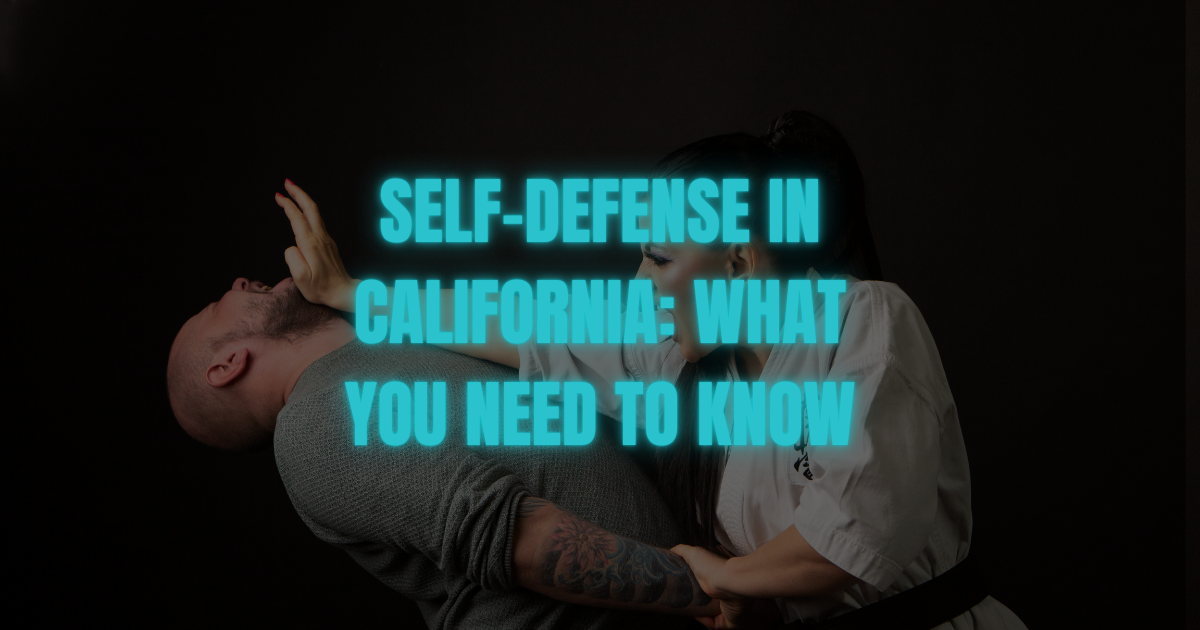
Self-defense is one of the most misunderstood legal concepts in criminal law. People often hear stories in the news about deadly confrontations, and assume that simply reacting with force is legally justified. But California law lays out very specific rules about when the use of force is lawful.
Recent national incidents involving ICE agents and claims of self-defense have sparked intense public debate about what counts as legally justified force. In Minneapolis, when Renee Nicole Good or Alex Pretti were shot by ICE agents during an encounter, federal officials defended the shooting as self-defense, claiming they posed an imminent threat.
But legal experts stress that claims of self-defense, whether by a federal agent or a private citizen, rest on well-established standards about reasonable and proportional force, not simply fear or allegation. They must align with the legal requirements that protect individuals and communities under California law and the U.S. Constitution.
Understanding these rules matters both in the courtroom and in everyday life.
What California Law Says About Self-Defense
Under California law, you may legally use force to defend yourself or others only when all three elements are present:
- Reasonable belief that you or someone else is in imminent danger of being killed, suffering great bodily injury, or being touched unlawfully
- You reasonably believe that the immediate use of force is necessary to defend against that danger
- You use no more force than is reasonably necessary to defend against the threat.
The key legal term here is “reasonable force.” This means the force used must match the threat faced. If force is greater than necessary to prevent harm, a claim of self-defense generally fails.
This standard applies equally to everyday people and to law enforcement officers. Society expects an objective evaluation: would a reasonable person in your situation feel they had no choice but to act?
Why “Equal Force” Matters Legally
Contrary to some popular beliefs, self-defense does not mean “you can use any force you want if you feel threatened.” The law requires that force be proportional to the threat.
For example, imagine you are walking down the street and someone approaches you in an aggressive way, threatening you verbally and raising their fist. In that moment, you might feel fear. The law recognizes that fear. But if, in response, you suddenly pull out a knife and threaten to stab them, that response would likely be seen as excessive force under California law. A knife produces a much greater degree of harm than a fist, and using a knife against a fist would likely be unreasonable and disproportionate. In that case, the self-defense claim may not protect you.
This idea — that force must be no greater than necessary — is fundamental. California juries are instructed to consider whether a reasonable person in the same situation would have felt that deadly force was required at that moment, and whether the amount of force used was justified.
Real Life and High-Profile Claims of Self-Defense
In national headlines, incidents like the fatal shooting of Renee Good involve law enforcement and complicated facts. Government statements claimed the ICE agent acted due to an imminent threat posed by her vehicle. But legal commentators and some lawmakers argue the evidence does not clearly support that the threat was immediate or unavoidable.
Even when authorities assert self-defense, the same basic rules apply: the force must be justified, proportional, and essential to prevent serious harm. Federal use-of-force policies generally align with these principles, stating that deadly force may only be used when the officer reasonably believes there is an imminent threat of death or serious injury.
While ICE agents and other law enforcement have broad authority under federal law to enforce immigration statutes and protect themselves, constitutional protections — like those that require reasonable force — still apply. Critics argue that when force exceeds what is objectively reasonable under the circumstances, it crosses the line from self-defense to unlawful use of force.
These debates highlight why understanding the legal standard is essential, not just for law enforcement, but for all Californians.
Everyday Self-Defense Situations
Most self-defense claims do not involve federal agents or dramatic, high-profile confrontations. Instead, they arise from much more common conflicts: arguments, bar fights, or street altercations.
California law allows you to defend yourself when you reasonably fear immediate harm. But that fear must be grounded in reality, and not assumption. And your response must be proportionate.
For instance, if someone swings at you, using your own hands or arms to block or retreat is generally acceptable. But escalating to a weapon when no deadly force is being used against you typically will not meet the legal standard. The moment you use significantly greater force than necessary to stop a non-deadly attack, you risk criminal charges yourself.
Why You Need an Experienced Defense Attorney in the Inland Empire
Self-defense cases are often complicated. Prosecutors will scrutinize every detail: each movement, decision, and second leading up to a claimed act of self-defense. Judges and juries must be convinced that the force used was truly reasonable under the specific circumstances.
Whether your case involves law enforcement, a civilian altercation, or a disputed claim of self-defense, it is critical to speak with a knowledgeable criminal defense attorney who understands California self-defense law and the unique dynamics of local courts in the Inland Empire.
At Inland Empire Criminal Defense, we help clients fully explore every legal defense, including self-defense claims, and fight for your rights — both in court and in negotiation. If you or a loved one is facing charges, having experienced counsel makes all the difference.
Call us today at (909) 939-7126 for a free consultation and to protect your future.