

Lindsay Clancy Defense Attorney Seeks Holdout Juror’s Phone Records: What Could It Actually Change?
Key Takeaways
- Lindsay Clancy’s trial ended in a mistrial, not a guilty or not-guilty verdict.
- Her defense attorney is seeking information about the holdout juror’s alleged cellphone use during deliberations.
- Phone records could potentially provide evidence relevant to an alleged juror misconduct investigation; however, finding misconduct would not automatically change the outcome or guarantee dismissal of the criminal case.
- The investigation could matter more to what happens next, including arguments concerning a possible retrial.
The Lindsay Clancy murder trial has already ended, but the legal fight may not be over.
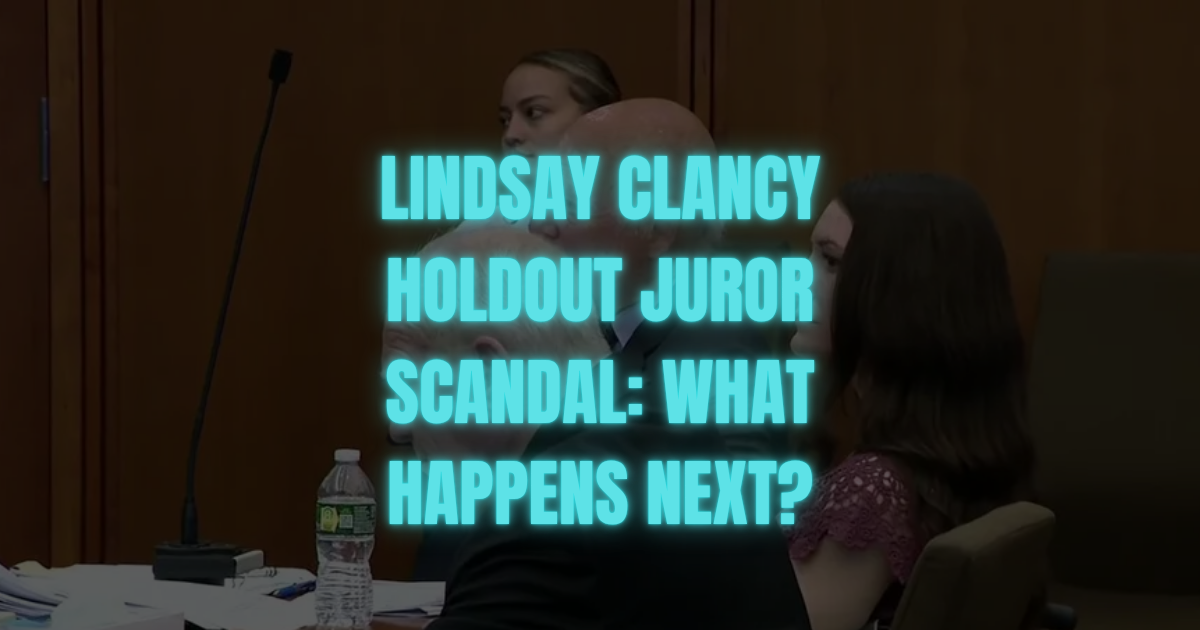
Clancy’s defense attorney is now asking a Massachusetts judge to investigate the lone holdout juror, including whether the juror used a cellphone during jury deliberations. The defense has asked for phone records and other information that could shed light on the juror’s conduct during the trial.
But here is the important question: If the defense finds something on that phone, does it actually change the outcome of the trial?
Not necessarily. In fact, the biggest issue is that there was no final verdict in the first place.
What Happened With the Lindsay Clancy Jury?
Lindsay Clancy was tried in Massachusetts after being accused of killing her three children in 2023. Her defense argued that she was not criminally responsible because of severe postpartum psychosis, while prosecutors argued that she understood what she was doing.
After days of deliberations, the jury could not reach a unanimous decision. Reports indicated that 11 jurors supported a finding that Clancy was not criminally responsible, while one juror remained opposed. The judge ultimately declared a mistrial on September 4, 2026.
That distinction matters.
A mistrial is not the same thing as a guilty verdict or an acquittal. Because the jury never reached a unanimous verdict, the criminal case was not resolved on the merits. Prosecutors may still have the ability to seek another trial.
Why Does the Defense Want the Juror’s Phone Records?
Clancy’s attorney, Kevin Reddington, has asked the court to investigate allegations concerning the holdout juror.
Among other things, the defense is seeking information about:
- Possible cellphone use during deliberations
- Phone call and data records
- Text messages
- The juror’s device itself
- Jury questionnaires and background information
- Records concerning cellphone use by jurors during deliberations
The defense has also raised questions about whether the juror was truthful during jury selection. These are allegations being investigated, not established findings of misconduct.
If a juror improperly used a phone to research information, communicate with outsiders, or otherwise violated the judge’s instructions, that could raise a legitimate legal issue. However, simply finding that a juror used a phone would not automatically mean the defense wins the case.
What Would Happen If Juror Misconduct Were Proven?
This is where things get complicated.
Courts generally take jury independence and deliberations very seriously. A juror is supposed to decide the case based on the evidence and instructions provided in court—not outside research, social media, private communications, or information discovered independently.
California provides a useful comparison.
Under California Penal Code 1089 (PC 1089), a juror can be removed during a criminal trial for good cause, with an alternate juror potentially taking that person’s place. California law also recognizes juror misconduct as a potential legal issue.
Similarly, California Penal Code 1181 (PC 1181) allows a court to consider a new trial in certain circumstances, including situations involving jury misconduct that prevented fair consideration of the case.
California Evidence Code 1150 (Evid. Code 1150) also places limits on what evidence can be used to challenge a verdict. Evidence about conduct or events that could have improperly influenced a verdict may be considered, but evidence about a juror’s private mental process generally cannot be used simply to show why the juror voted a particular way.
The exact rules in Massachusetts are different, but the general concept is important: there is a difference between proving juror misconduct and simply disagreeing with a juror’s decision.
Does the Phone Investigation Change the Trial’s Outcome?
This is the part that can get lost in the headlines.
The original trial is over. The jury deliberated, failed to reach a unanimous verdict, and the judge declared a mistrial. Finding something on the juror’s phone cannot go back in time and change the vote that already occurred.
Instead, the investigation could potentially affect what happens next.
For example, if a court finds serious juror misconduct, that information could become relevant to the defense’s request for additional relief or to arguments about whether another trial should occur. Clancy’s lawyers have also asked the court to dismiss the case, arguing that another trial should not be permitted. Prosecutors, however, have not announced whether they will pursue a retrial.
So, ultimately, the phone records are about what happens after the mistrial, not about changing a verdict that was already entered.
And for anyone following the Lindsay Clancy case, or any criminal case, the bigger lesson is simple: jury misconduct allegations can matter, but proving misconduct and proving that it legally changes a case are two different things.
If you or someone you love is facing criminal charges in the Inland Empire of California, call our offices at 909-939-7126 to speak with an experienced criminal defense attorney who has handled hundreds of cases similar to this one. The first consultation is free.
FAQs
1. Did Lindsay Clancy get convicted?
No. Her jury could not reach a unanimous verdict, so the judge declared a mistrial on September 4, 2026.
2. Why does Lindsay Clancy’s defense want the juror’s phone records?
The defense is investigating allegations that the holdout juror may have used a cellphone during deliberations and is seeking records that could help determine whether jury rules were violated.
3. Can juror misconduct cause a criminal case to be dismissed?
Potentially, depending on the jurisdiction, the type of misconduct and its legal effect on the proceedings. However, proving that a juror broke a rule does not automatically require dismissal.
4. Can a juror use their phone during deliberations?
Jurors are generally required to follow the judge’s instructions regarding outside information and communications. Unauthorized phone use can become a legal issue if it involves prohibited research, communications, or other conduct that affects the integrity of the proceedings.
5. Could Lindsay Clancy be retried?
Potentially. A mistrial caused by a hung jury does not itself resolve the charges, and prosecutors may seek another trial. As of the latest reporting, prosecutors had not announced whether they would pursue a retrial.